StoryBloom

Your child will build a whole world in a game. Getting three sentences out of them is another matter.

StoryBloom turns what your child writes into a world they can see. The more detail they put in, the more there is to look at.
Try it free Free trial. No card. About five minutes to set up.
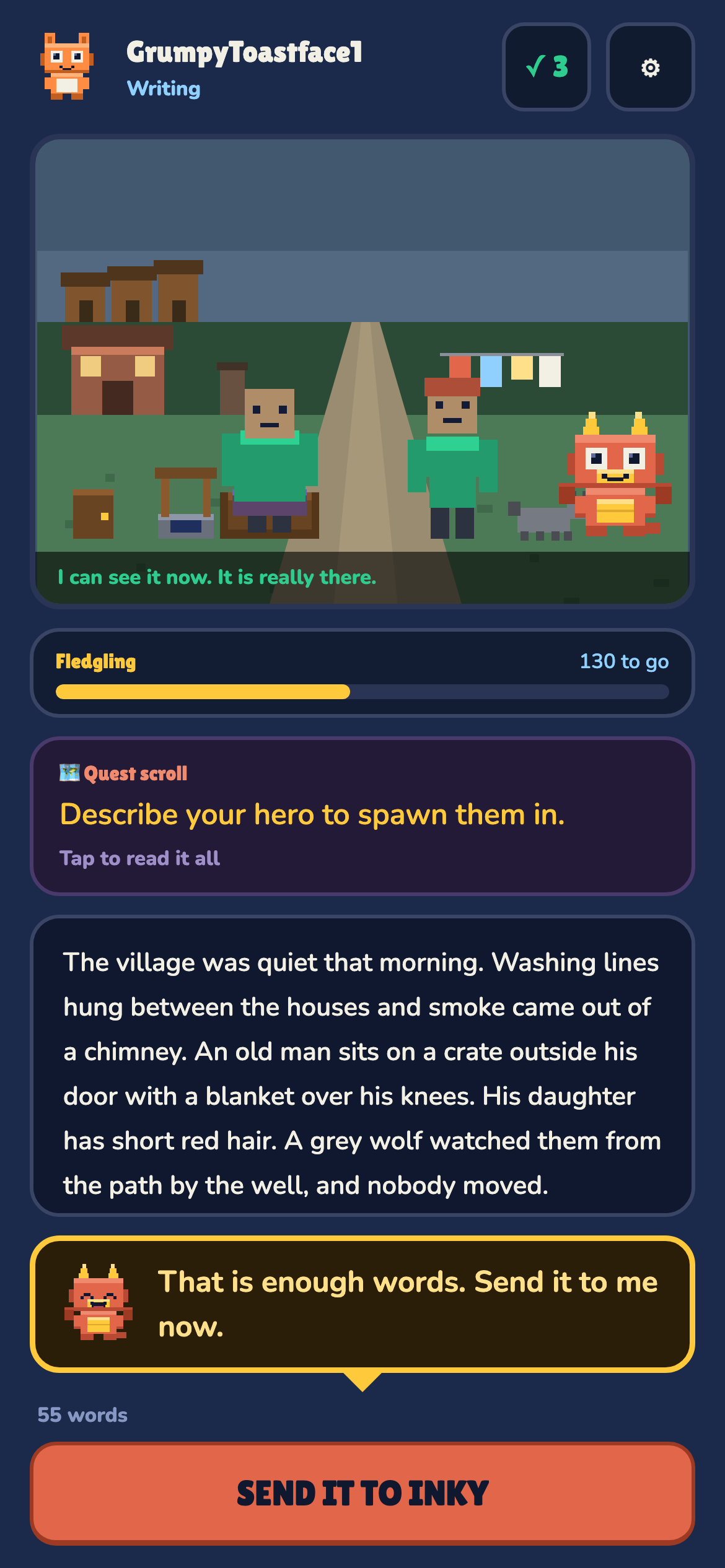
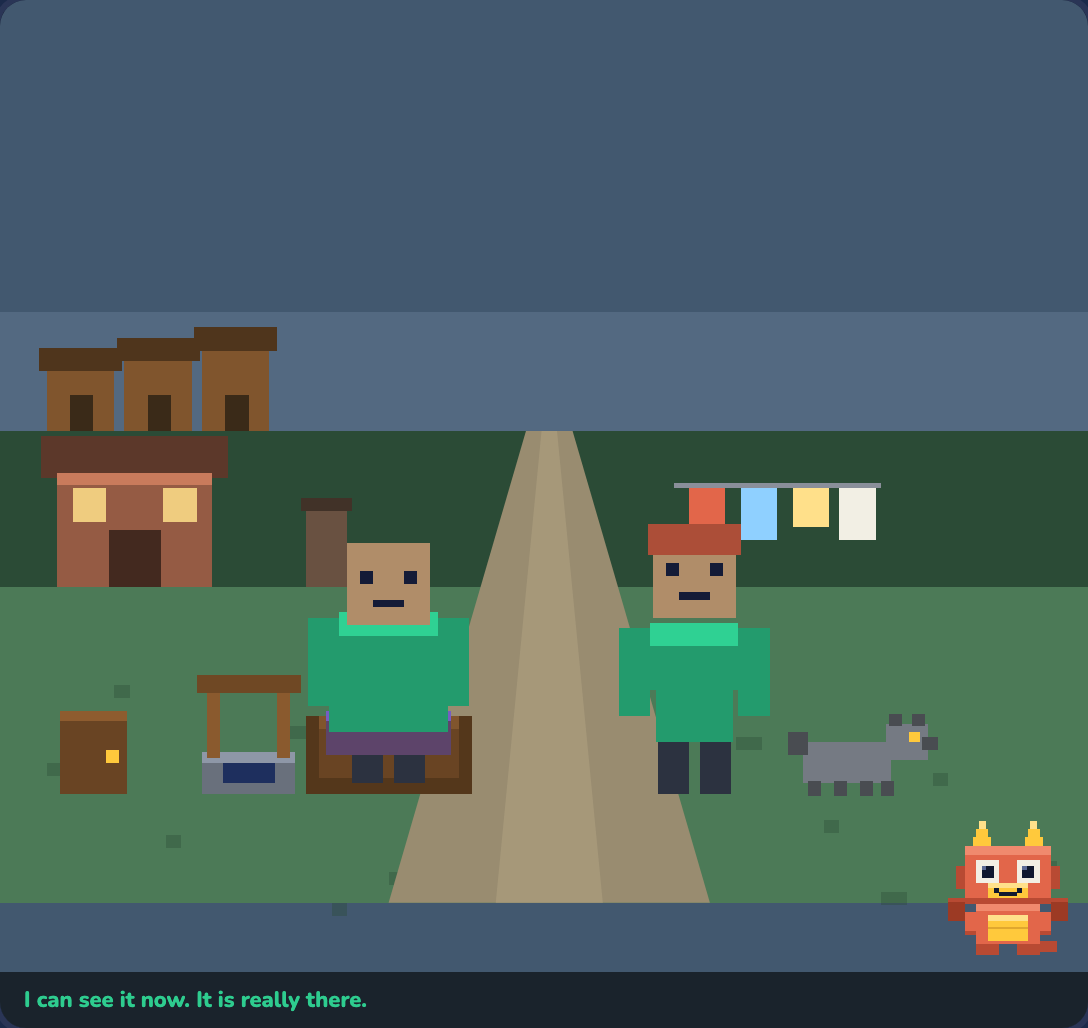
A village built from a child's writing, with houses, characters and a wolf

In ten years of teaching, the thing that never shifts is not ability.

It is willingness. I have taught children who can tell you a story out loud for twenty minutes, full of detail, genuinely funny, and then write four flat sentences on a page and put the pencil down.

The reason is simple enough when you look at it from their side. Writing is hard, it takes a long time, and nothing happens at the end of it. A page of neat handwriting looks exactly like a page of rushed handwriting. Whatever effort they put in disappears.

So I built the thing I kept wishing existed. Your child writes, and their words turn into something in front of them. Vague writing gives them very little to look at. Detail gives them more. Nobody has to nag them about adjectives, because they can see the difference themselves.

Mr Zak, Brain Bloom Education

Three things happen.

1
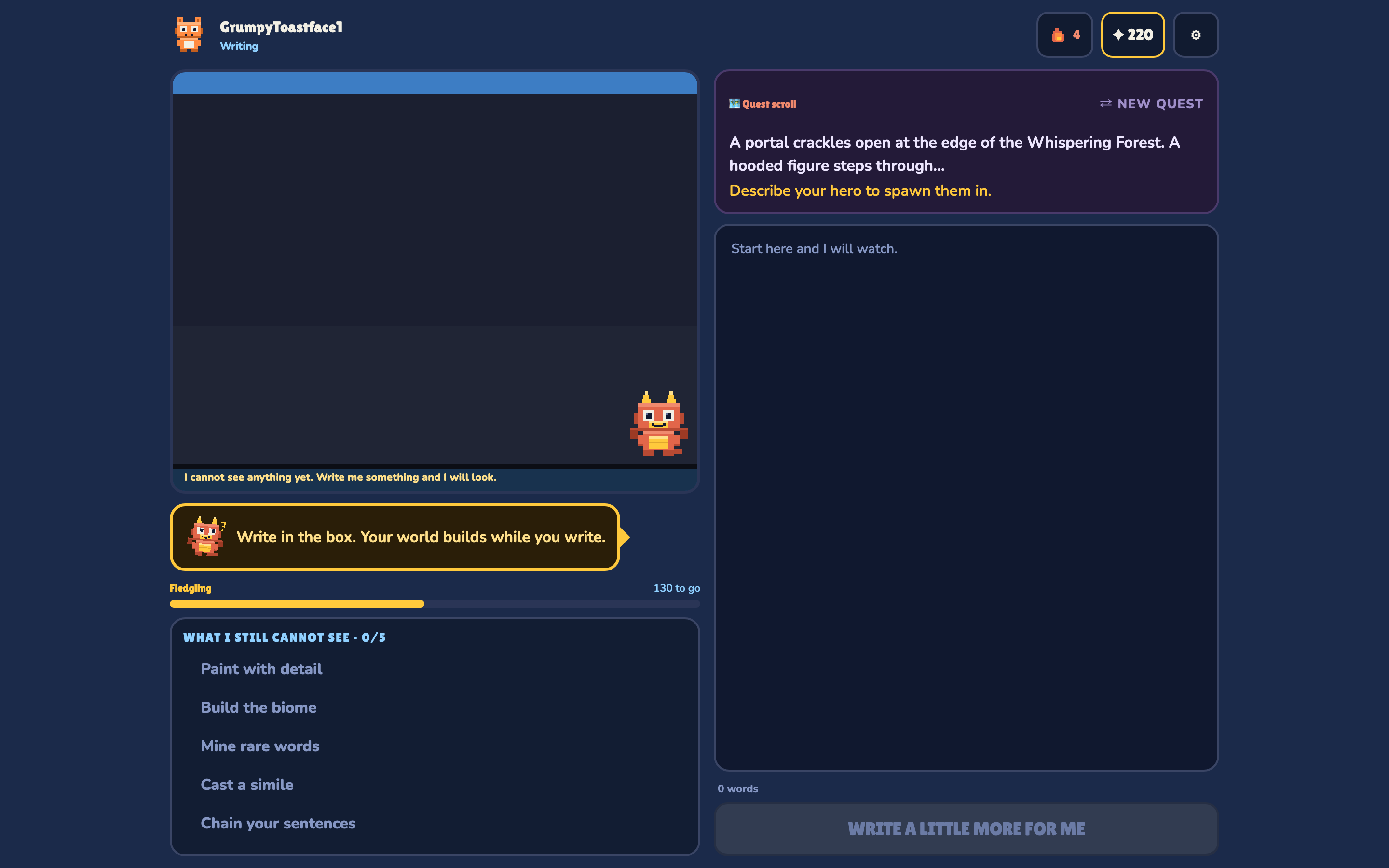
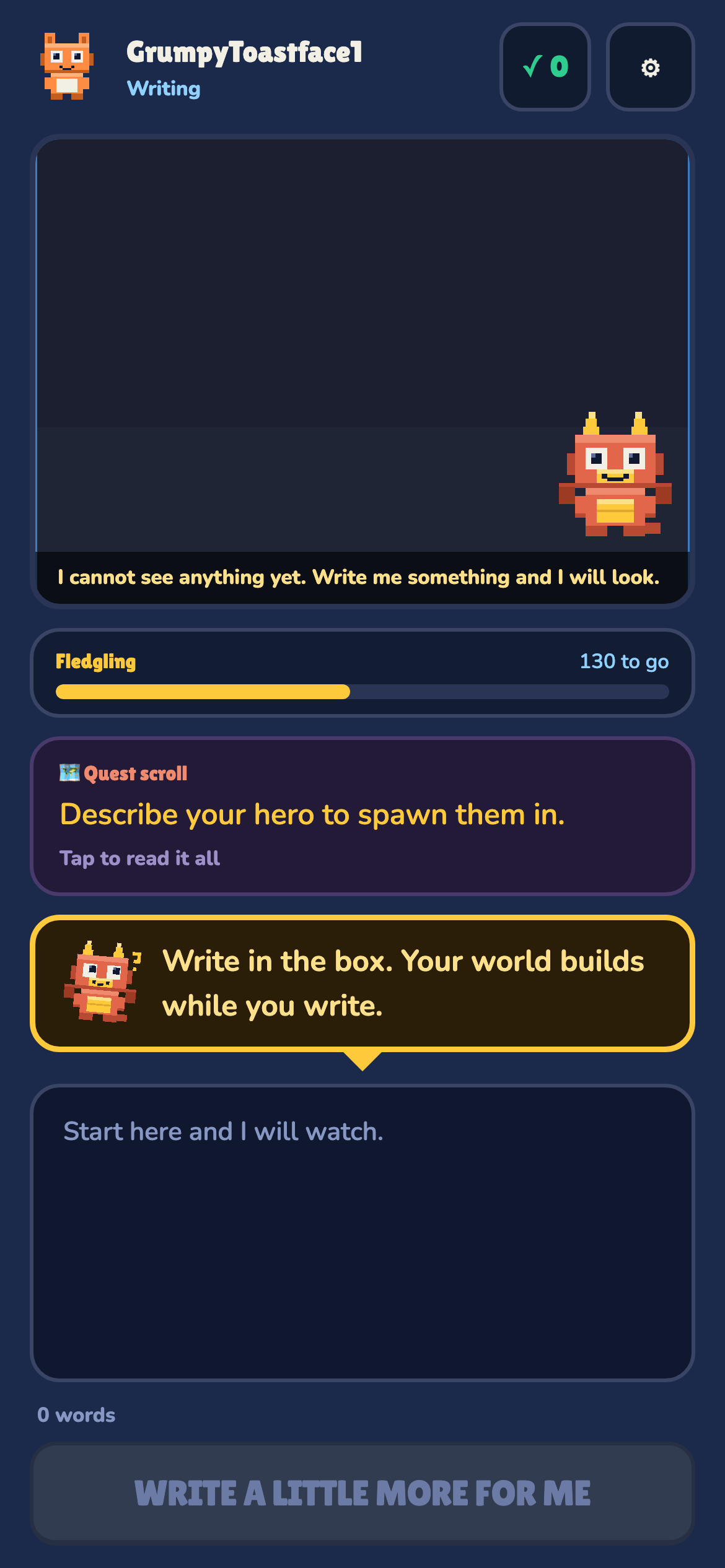
The StoryBloom writing screen, with a quest prompt and an empty box

They write

A prompt appears and they start writing. No timer, no word count staring at them.
2
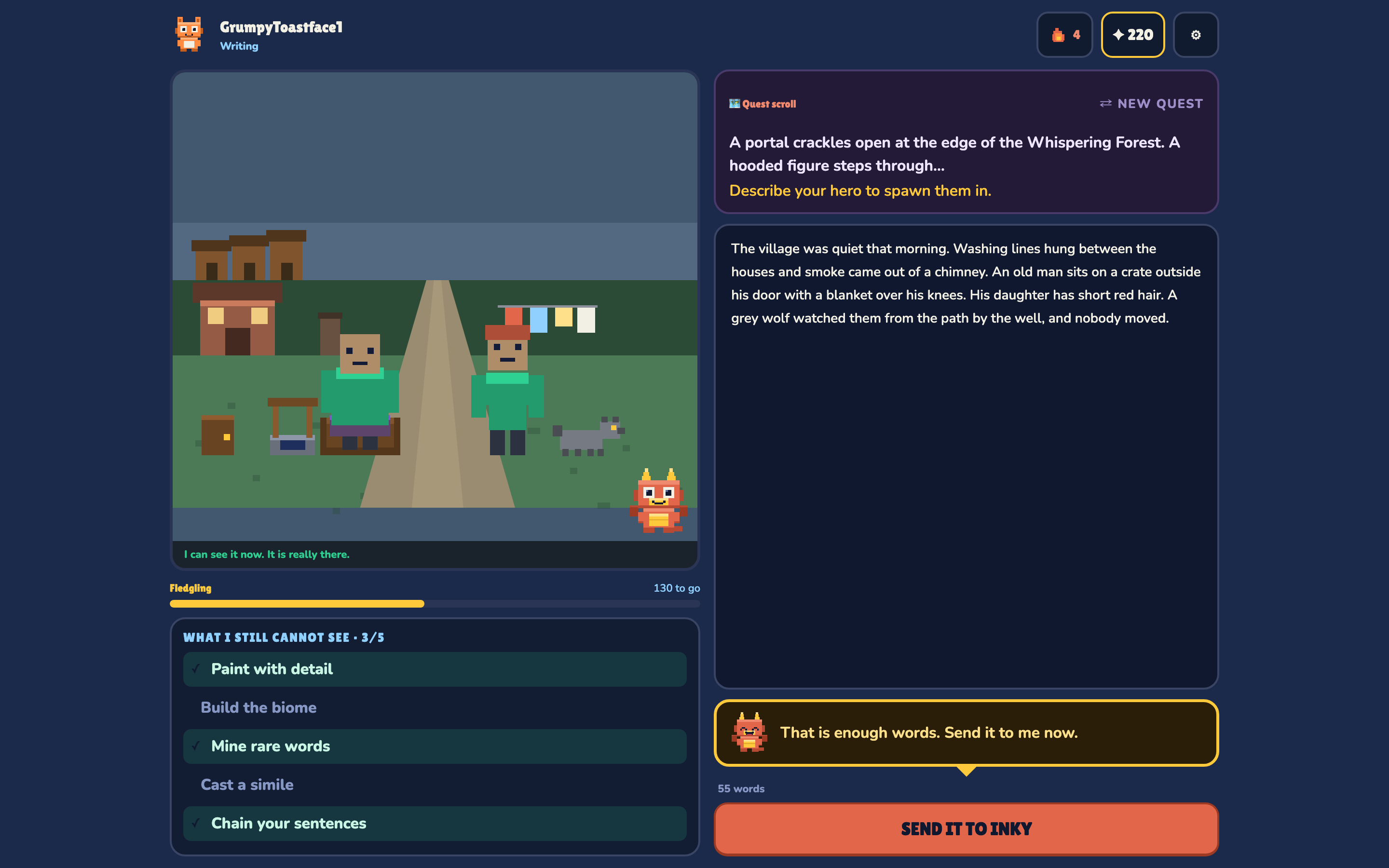
A village built from the writing, beside the text that made it

The world builds

Their words become a place. Thin writing makes an empty world, so they go back and add detail without being asked.
3
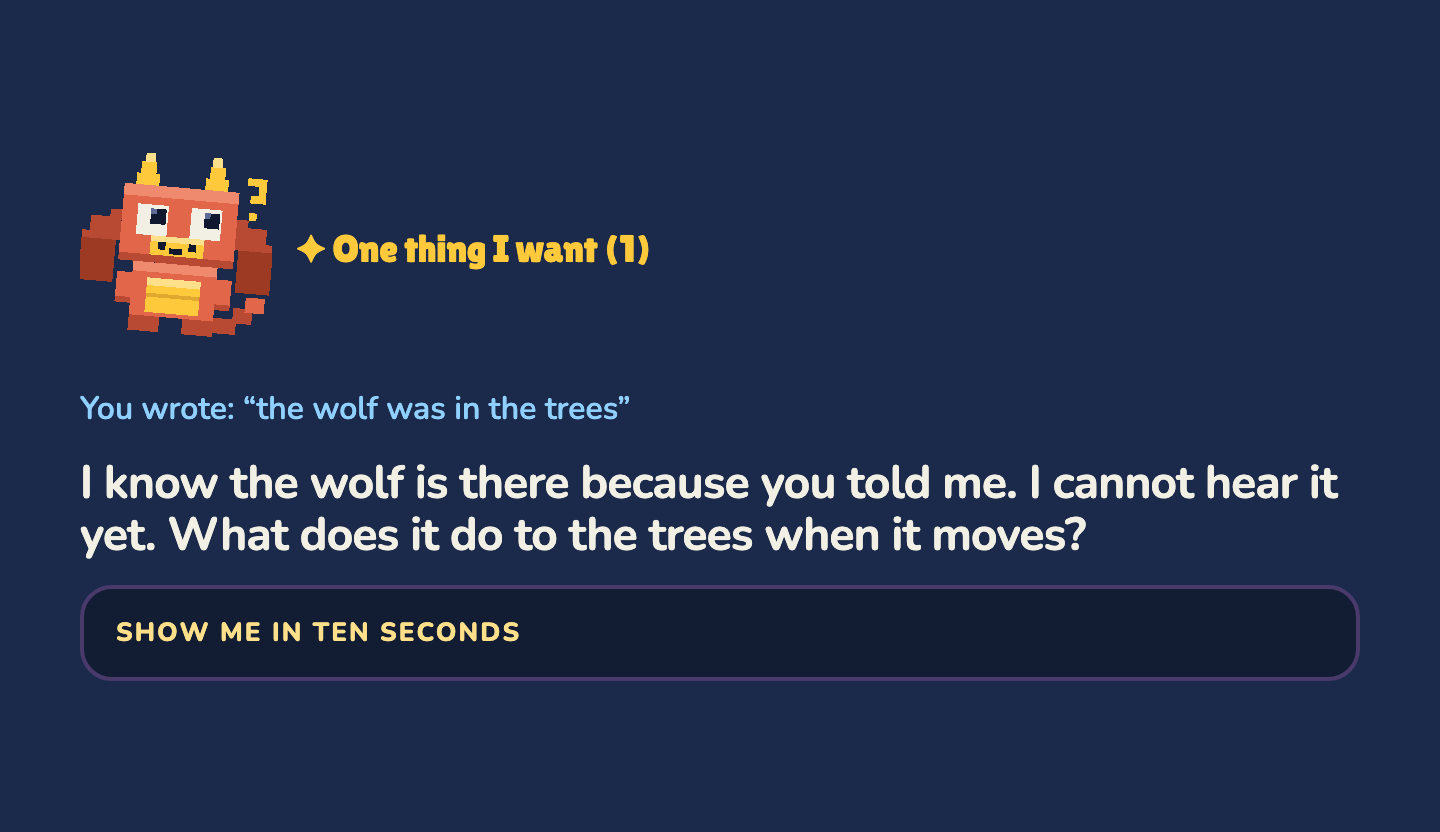
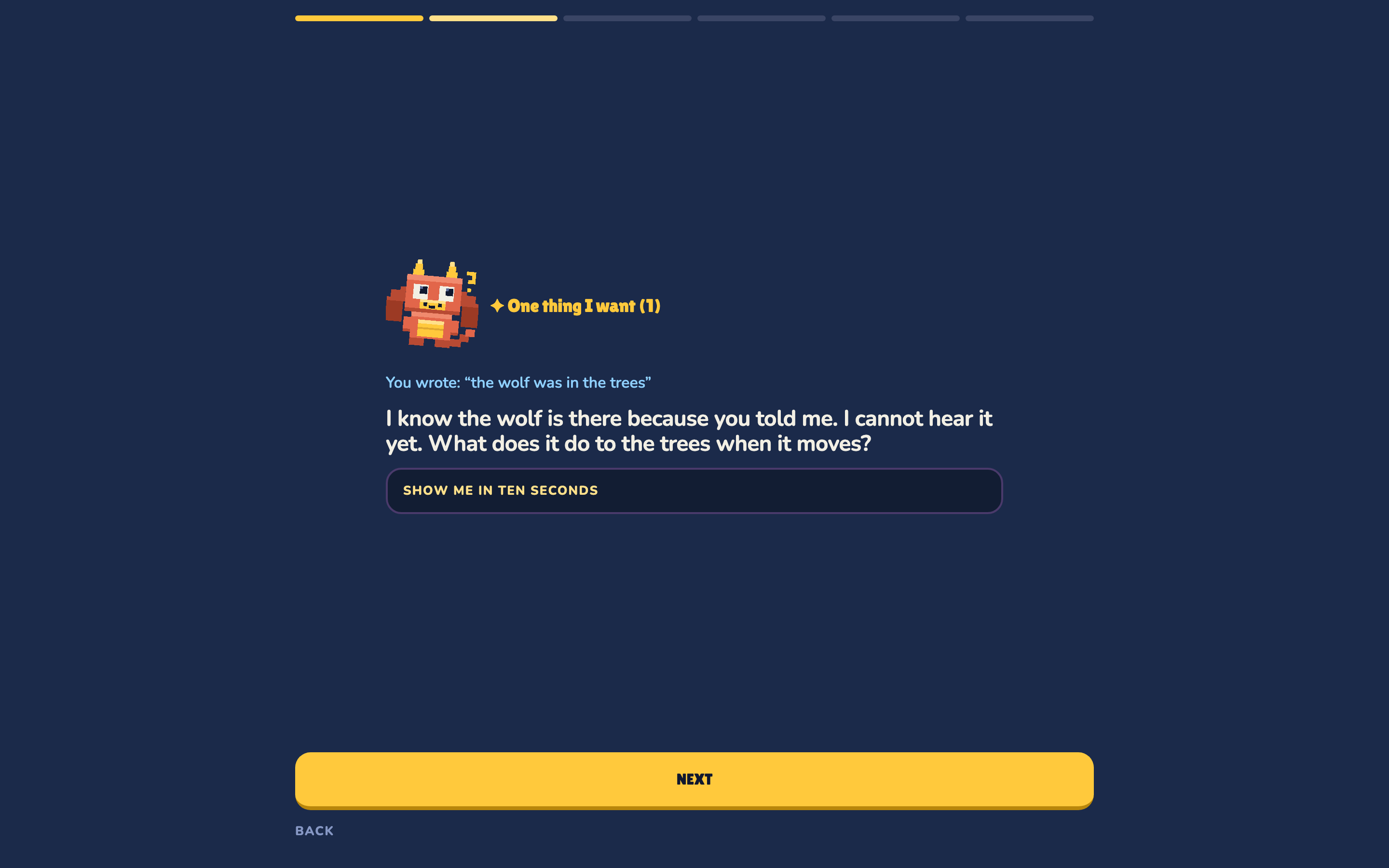
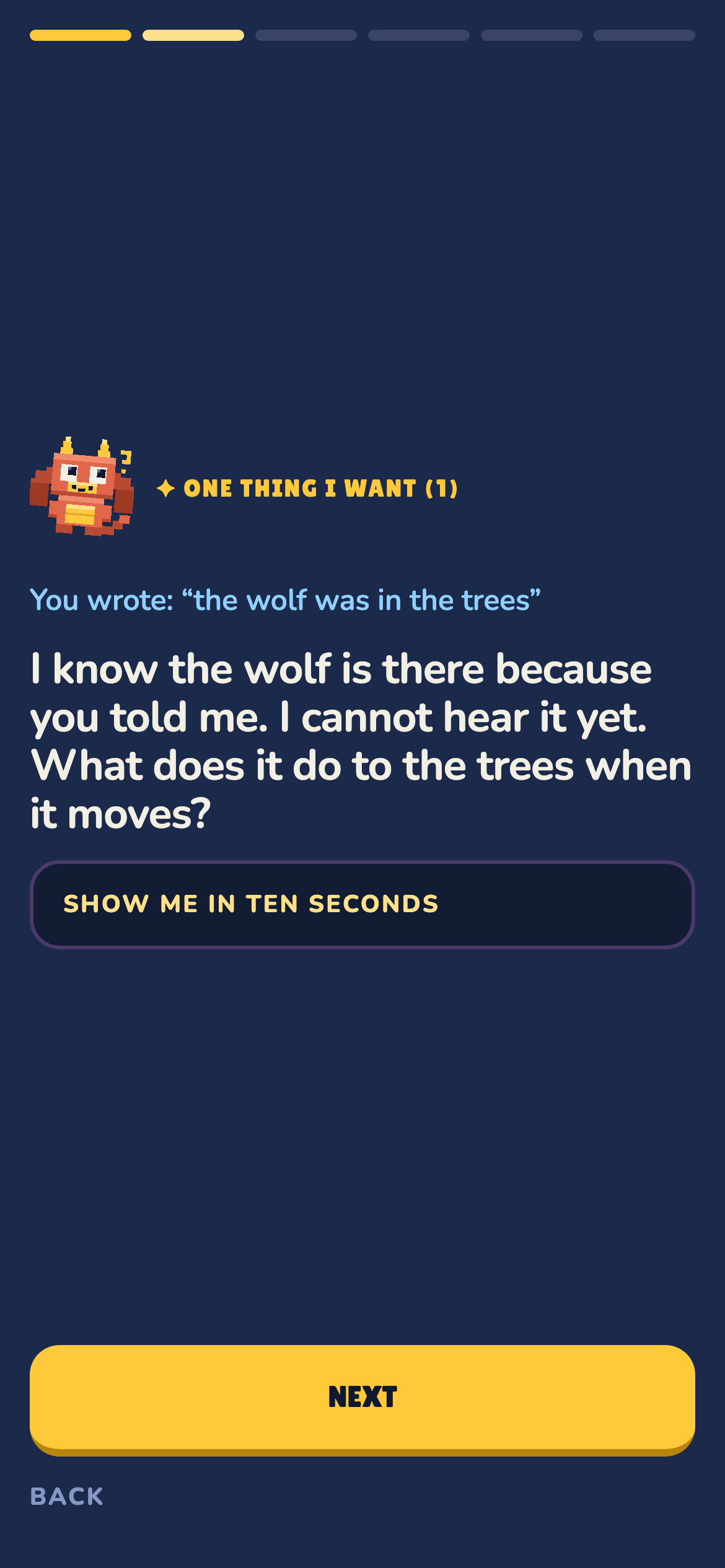
Inky asking what the wolf does to the trees when it moves

Inky replies

A character reads what they wrote and gives three specific things to try next. No marks, no scores, no red pen.

Drag the handle.

Left is what four rushed sentences produce. Right is the same idea with detail added. Children work this out in about ten seconds.

The same scene written with detail: houses, two characters, a well and a wolf
With detail

The castle leaned over a lake so still it held the towers upside down. Moss had climbed the west wall.
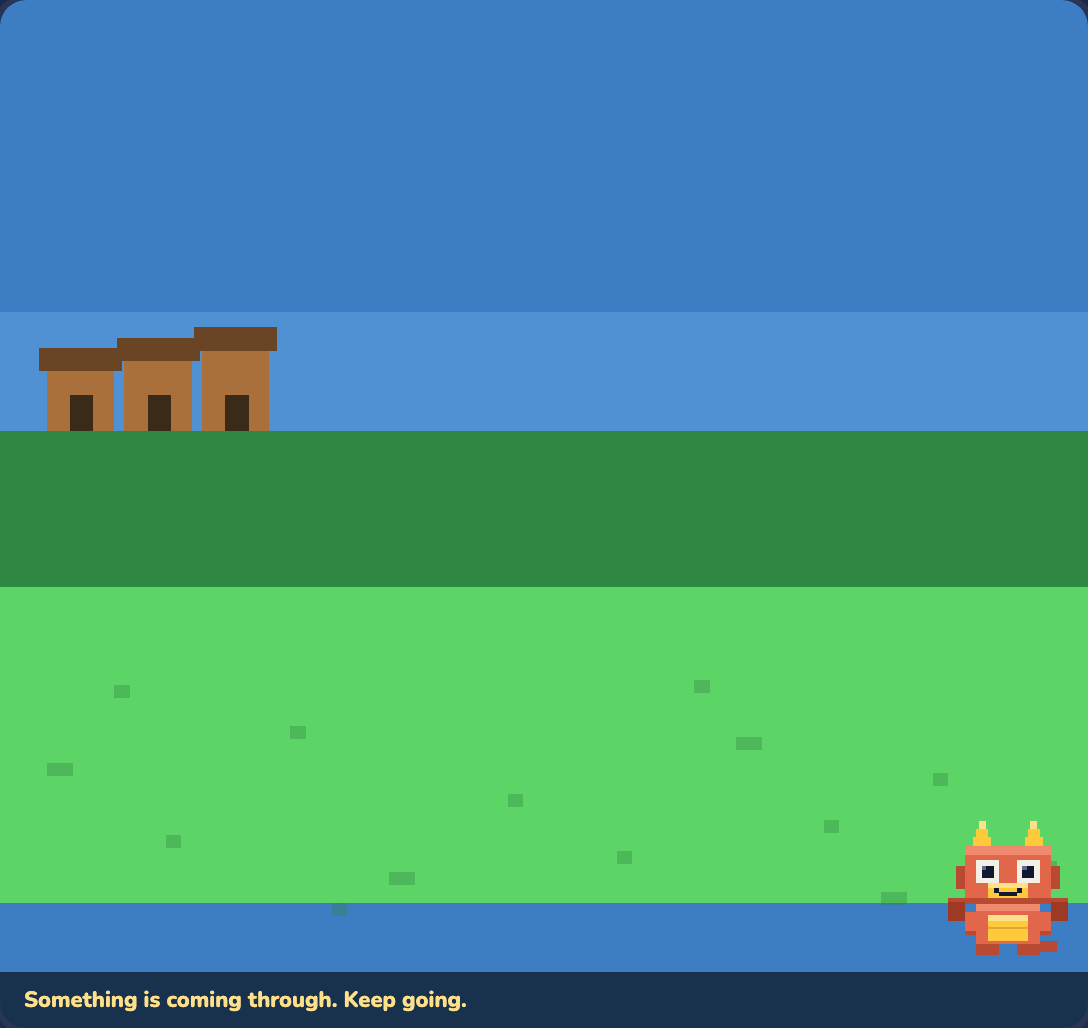
The scene written without detail: mostly empty ground and a few huts
Without detail

There was a castle. It was near some water. It was big. The end.
Four decisions we made deliberately.

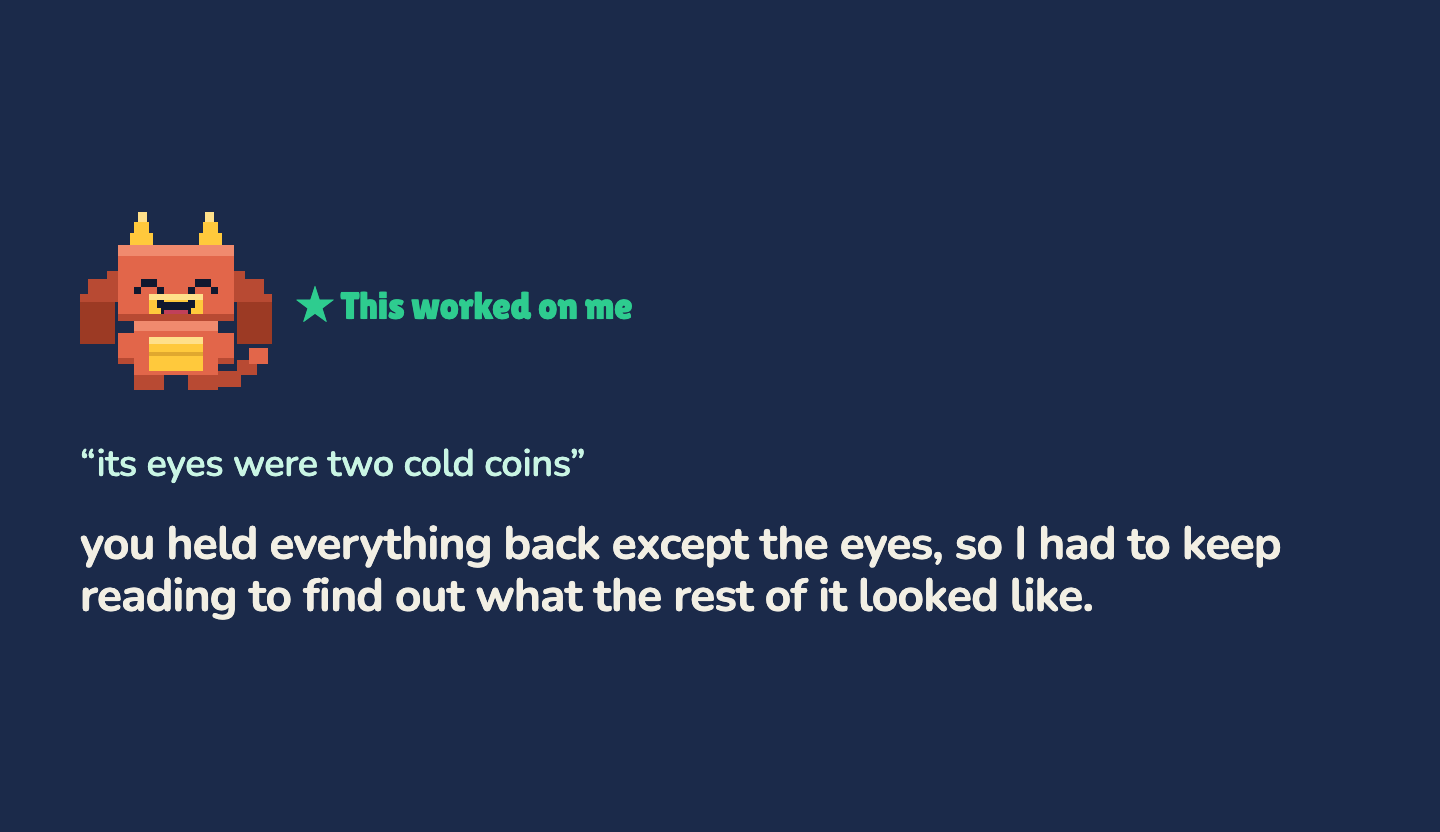
Inky quoting back a line the child wrote and saying why it worked
1 The praise names the sentence, not the child.
Inky asking what the wolf does to the trees when it moves
2 Then one thing to try, phrased as a question.
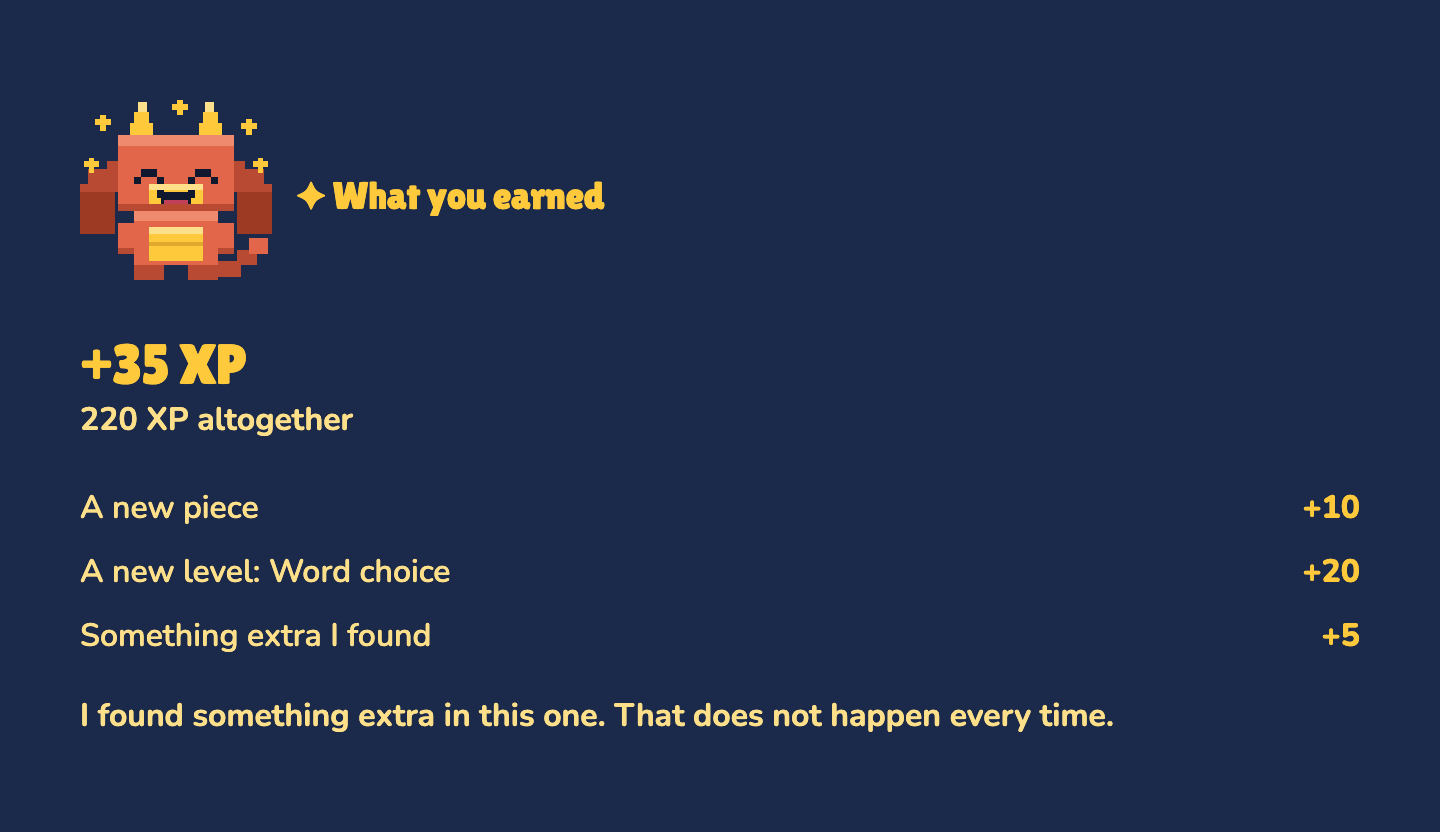
The end of a piece showing experience points earned, with no grade anywhere
3 And the reward. Nowhere on it is a mark.

This is the whole of what comes back after a piece of writing. There is no score in it anywhere, and that is deliberate.

✓

No marks or scores are ever shown to a child.

✓

Feedback praises the technique, never labels the child.

✓

Everything is tied to 11+ and KS2 writing criteria.

✓

Built by a tutor who teaches these children, not by a software company.

Mr Zak, founder of Brain Bloom Education

Mr Zak

I founded Brain Bloom Education and I teach English to children preparing for the 11+ and working through KS2. Ten years in, I still think the hardest part of teaching writing is getting a child to want to start.

StoryBloom was built for my own students first. It went to them before it went to anyone else, and it changed because of what they did with it. Our tuition carries a straightforward promise: we measure your child at the start and the end of every term, and you see both results. The same standard applies here.

What parents ask first.

Is my child’s writing used to train AI?
Partly, and we would rather be straight with you about it. Your child’s writing is used to improve how StoryBloom gives feedback, so that the next child gets better guidance than the last one did. Anything identifying is stripped out first, and it is never sold, and never handed to an outside company to train their own systems. If you would rather your child’s work was left out of that entirely, email info@brain-bloom.co.uk and we will exclude it. You do not need to give a reason, and it will not change anything about how the app works for them.
Who can see what my child writes?
Only their tutor at Brain Bloom Education, in order to mark it. It is never published or shown to anyone else without asking you first, separately.
Does it mark or grade my child?
No. Children never see a score. They see three things to try next, and that is deliberate. Scores tell a child what they are. Next steps tell them what to do.
What ages is it for?
Years 3 to 6, roughly ages 7 to 11. The writing targets adjust to the year group.
Does it work on a phone?
Yes, and on tablets and laptops.
How much is it?
Free during the trial. No card details needed.
How long does it take to set up?
About five minutes. You create an account, confirm your email, and add your child.
Is it safe?
Children choose a made up username, never their real name. What they write is checked before anything is shown back to them. All data is stored in the EU and you can delete it at any time.
What if my child does not like it?
Tell us. It is early and we would rather know what is not working than have you quietly stop using it.

Give it twenty minutes on a wet Sunday.

If your child writes more than they would have done otherwise, it is doing its job.

Try it free

Free trial. No card needed. About five minutes to set up.

Tell us what is actually going wrong.

We will send you something useful rather than a sales email. The last question genuinely shapes what we build next.

Brain Bloom Education Ltd is registered with the Information Commissioner’s Office, registration ZC181826.